Dental implants in Yerevan
The surgical stage of replacing a tooth: an implant is placed in the jawbone and, once it has healed in, supports a crown or a denture. The operation is planned from a CT scan and done under local anaesthesia.
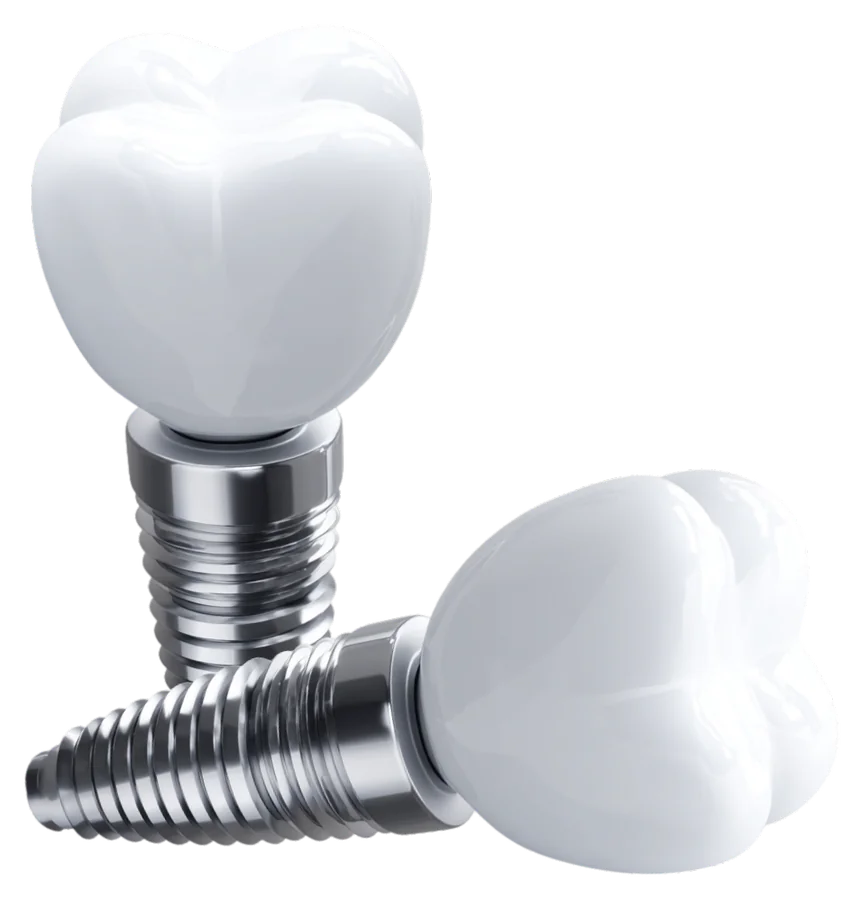
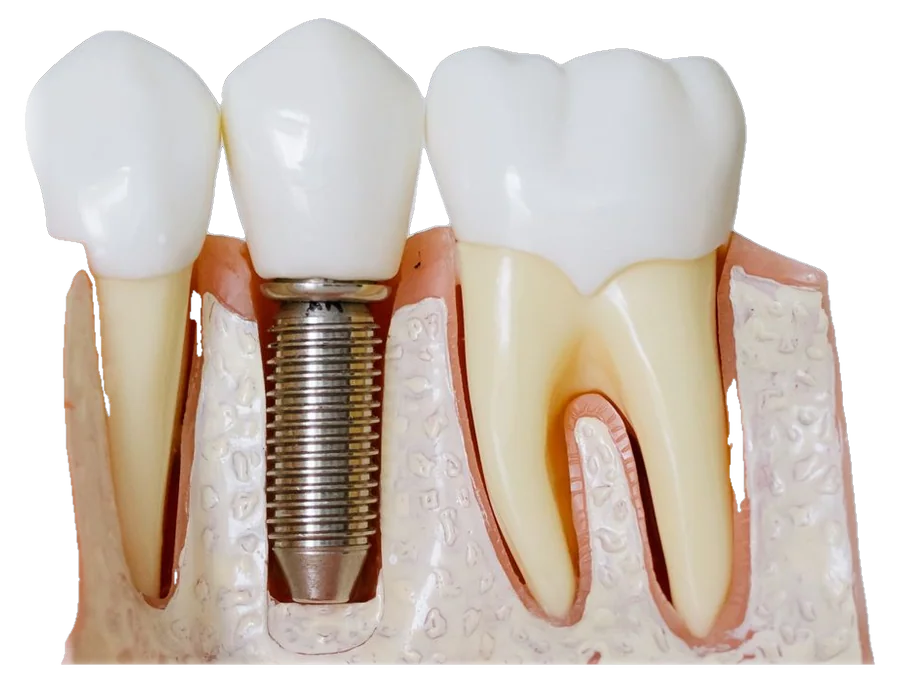
An implant is an artificial root placed in the jawbone where a tooth has been lost. Once it has healed in, it supports a crown, a bridge or a full-arch denture. Implants are used when one, several or all teeth are missing.
An implant passes chewing forces to the bone and, unlike bridges and removable dentures, helps preserve its volume. Crowns and dentures on implants do not need to be taken out at night or after meals, and they look natural — with no visible clasps or attachments.
Choosing the technique
The doctor chooses the technique according to the condition of the bone and gums. If a tooth is extracted with no signs of infection, an implant may, when indicated, be placed straight into the socket, which means fewer procedures. In the classic two-stage technique the implant first heals in under the gum — usually 2–4 months in the lower jaw and 4–6 months in the upper. If there is not enough bone, bone grafting or a sinus lift comes first.
Placing one implant is done under local anaesthesia and usually takes 30–60 minutes. The crown on the implant is the next, prosthetic stage: a prosthodontist fits the permanent crown or denture, as a rule once the implant has healed in.
Book a consultation at iOrtho in Yerevan: the doctor will assess your teeth and bone, refer you for a CT scan and propose an implant plan for your case.
Benefits
Long service life
With proper care and regular check-ups an implant lasts a long time and, as a rule, does not need replacing.
Full chewing function
Crowns and dentures on implants stay in place when you chew moderately hard, fibrous or sticky food.
Bone preservation
An implant transfers load to the jawbone and helps slow bone loss, which matters for facial proportions and the neighbouring teeth.
A natural look
No visible clasps or attachments, so you can smile and talk without feeling self-conscious.
Nothing to take out
Restorations on implants are not taken out at night or after meals; if needed, only the dentist removes them for cleaning or maintenance.
CT-based planning
A CT scan shows the bone volume, the position of nerves, sinuses and neighbouring roots, and any hidden inflammation.
Indications
- One missing tooth
- Several missing teeth in a row
- No teeth left in a jaw — support for a full-arch denture
- A tooth that cannot be saved — when indicated, the implant is placed right after the extraction
- Bone loss after a tooth was lost long ago — implants combined with bone grafting
Treatment stages
- 1.
Consultation and diagnostics
The surgeon asks about chronic conditions, allergies and medicines, examines the teeth, gums and bite and refers you for a CT scan. If needed — tests and the opinion of a cardiologist, an endocrinologist or an ENT specialist.
- 2.
Preparation
Professional cleaning, treatment of decay and gums, extraction of teeth in the implant area and, if needed, bone grafting or a sinus lift.
- 3.
Surgical plan
From the CT data the doctor sets the position, angle and type of the implant and the technique — immediate or two-stage; a surgical guide is made if needed.
- 4.
Implant placement
Under local anaesthesia the implant is placed in a prepared bed in the bone; one implant usually takes 30–60 minutes. In the two-stage technique it is closed with a cover screw and the gum is stitched over it.
- 5.
Healing
The implant fuses with the bone — usually over 2–4 months in the lower jaw and 4–6 months in the upper. When indicated, a temporary crown or denture is fitted for this period.
- 6.
Healing abutment and crown
Once the implant has healed in, a healing abutment is fitted, and about two weeks later a prosthodontist places the permanent crown or denture.
What's included
- Diagnostics and an individual implant plan
- Local anaesthesia
- Implant placement
- Check-ups while the implant heals in
- Aftercare advice
Care rules
Food
Do not eat for about two hours after surgery; for the first two days choose warm, soft food such as purées and yoghurt.
Hygiene in the first days
On the evening of the surgery and the next morning brush gently, avoiding the treated area; rinse only with the prescribed solution, and gently.
Activity
For two weeks avoid heavy lifting and exercise and stay away from bathhouses, saunas and hot baths. Take prescribed medicines as instructed.
Warning signs
If gum swelling increases, pain gets worse three days after surgery or you develop a fever, see your doctor at once.
Long-term care
Brush every day with the brush and toothpaste your dentist recommends, use a water flosser and have regular professional cleaning and check-ups.
Questions and answers
Does getting an implant hurt?
Placement is done under local anaesthesia chosen for the scope of the work and your health. In the first days after surgery there may be swelling and soreness — the doctor will prescribe medicines and explain how to care for the area.
Can an implant be placed right after an extraction?
Yes, if there are no signs of infection in or around the tooth and there is enough bone. Immediate placement is not done with decay, pulpitis or periodontitis in the tooth, soft-tissue inflammation at the site, growths attached to the root or bone loss. The doctor decides after an examination and a CT scan.
How long does an implant take to heal in?
Usually 2–4 months in the lower jaw and 4–6 months in the upper. If the implant is stable enough, a temporary crown or denture may be fitted for this period when indicated. If bone grafting was needed, the treatment as a whole takes longer.
What if there is not enough bone?
Then bone grafting is done before or together with implant placement, and in the upper back teeth area a sinus lift. A CT scan shows the bone volume, and the doctor chooses the technique for each case.
Are there contraindications to implants?
Placement is postponed while there are sources of infection in the teeth or gums — these are treated first. The doctor reviews chronic conditions such as diabetes or heart disease, allergies and medicines in advance and, if needed, refers you for tests and the opinion of a cardiologist, an endocrinologist or an ENT specialist.