Tooth extraction in Yerevan
We remove teeth that can no longer be treated and saved — from simple cases to impacted and misplaced wisdom teeth. The procedure is done under local anaesthesia, following a plan based on an X-ray.
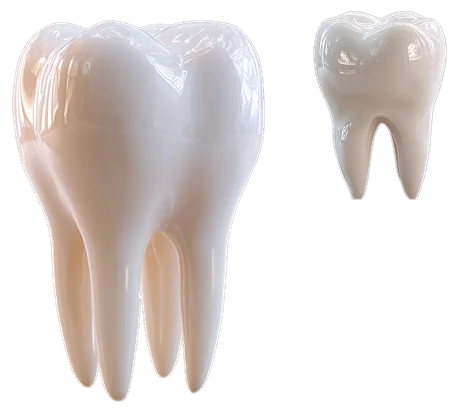
A tooth is extracted when it can no longer be treated and saved: deep decay, periodontitis, a cyst, a cracked root or an injury, or when the tooth is misplaced and gets in the way of its neighbours. Extraction may also be needed before implant placement, prosthetic work or treatment with braces or aligners. The doctor decides after an examination and an X-ray.
Simple and complex extraction
Simple extraction is used when the visible part of the tooth is intact and easy to reach: the doctor gently loosens the tooth with special instruments and lifts it out of the socket — with no incisions and no drilling.
Complex extraction is needed when the tooth is badly broken down, its roots are curved or it has not erupted. The doctor makes an incision in the gum and, if necessary, opens access through the bone; a multi-rooted tooth may be divided and the roots removed one by one to spare the socket and the gum. Stitches are placed when indicated and are usually removed after about a week.
Wisdom teeth
Impacted (unerupted) and malpositioned (rotated or tilted) teeth are most often wisdom teeth. They can press on neighbouring teeth, injure the cheek and cause pain and inflammation. Such teeth are removed according to a plan: an X-ray or a CT scan shows where the roots, nerves and sinuses lie.
Before an extraction the doctor asks about your general health, chronic conditions, allergies and the medicines you take. In pregnancy, after a heart attack or stroke, with heart or vascular disease, a hypertensive crisis or blood-thinning medication, extraction is done with particular caution or postponed — the doctor decides.
Book a consultation with an oral surgeon at iOrtho in Yerevan: the doctor will examine the tooth, review the X-ray and explain whether it can be saved and how the extraction would go in your case.
Benefits
Local anaesthesia
The doctor chooses the anaesthetic and the dose for the scope of the procedure and your health; during the extraction you usually feel only pressure.
Decisions based on imaging
An X-ray, and a CT scan in complex cases, shows the number, length and shape of the roots and how the tooth sits next to its neighbours.
A gentle technique
When needed, a difficult tooth is divided and the roots are removed one by one to spare the socket and the gum.
Asepsis
Extraction is done with sterile instruments under aseptic rules, which lowers the risk of wound infection.
A clear plan
Before the procedure the doctor explains how the extraction will go, the possible risks and the alternatives, and afterwards how to care for the socket.
Indications
- A tooth so damaged by decay that it cannot be restored
- Periodontitis, a cyst or inflammation that does not respond to treatment
- A cracked or fractured root, a jaw injury
- An impacted or malpositioned wisdom tooth that causes pain or inflammation or injures the cheek or the neighbouring tooth
- A misplaced tooth that gets in the way of its neighbours
- Planned extraction before implants, prosthetic work or orthodontic treatment — as the doctor decides
Treatment stages
- 1.
Consultation
The oral surgeon asks about your complaints, chronic conditions, allergies and medicines and examines the tooth.
- 2.
Imaging and plan
Using an X-ray, or a CT scan in complex cases, the doctor assesses the roots and the position of the tooth, chooses simple or complex extraction and explains the procedure, its risks and the alternatives.
- 3.
Anaesthesia
The doctor chooses the anaesthetic and the dose for the scope of the procedure and your health and starts once it has taken effect.
- 4.
Extraction
In a simple extraction the tooth is gently loosened and lifted out with special instruments. In a complex one an incision is made and, if needed, the tooth is divided and the roots are removed one by one.
- 5.
Finishing
The socket is cleaned and, when indicated, stitched; stitches are usually removed after about a week. The doctor gives aftercare advice.
What's included
- Examination and consultation with an oral surgeon
- Review of the X-ray and an extraction plan
- Local anaesthesia
- Simple or complex extraction of the tooth
- Care of the socket and stitches if needed
- Aftercare advice
Prices
| Service | Price |
|---|---|
| Tooth extraction — simple | On request |
| Tooth extraction — complex | On request |
Care rules
Food and drink
Do not eat for about 2–3 hours after the extraction and avoid hot and cold drinks. Then choose warm, soft food and chew on the other side.
Activity
Do not smoke, go to a bathhouse or sauna, or exercise in the first days after the extraction — the doctor will tell you for how long.
Hygiene
Brush gently, avoiding the extraction site, and rinse only with the prescribed solution, using gentle movements.
Stitches and medicines
If stitches were placed, come back to have them removed after about a week. Take any prescribed medicines exactly as the doctor advises.
When to call the doctor
If swelling or pain increases after a few days, you develop a fever or bleeding does not stop, contact your doctor right away.
Questions and answers
Does tooth extraction hurt?
Extraction is done under local anaesthesia, with the anaesthetic chosen for the scope of the procedure and your health. During it you usually feel only pressure. Once the anaesthesia wears off there may be moderate soreness — the doctor will tell you how to ease it.
How is a complex extraction different from a simple one?
A simple extraction needs no incisions: the tooth is gently loosened and lifted out with instruments. A complex one is needed when the tooth is badly broken down, the roots are curved or the tooth has not erupted: the doctor makes an incision, divides the tooth if needed, removes the roots one by one and places stitches. The doctor decides which one you need from the X-ray.
Does a wisdom tooth have to come out?
Not always. Removal is advised when a wisdom tooth has not erupted or is growing in the wrong position and causes pain or inflammation, injures the cheek or presses on the neighbouring tooth, and when indicated before orthodontic treatment. The doctor decides after an examination and an X-ray.
How should I prepare for an extraction?
Tell the doctor about any chronic conditions, allergies and medicines you take, especially those that affect blood clotting, and about a pregnancy. It is a good idea to eat beforehand, as you will need to avoid food for about 2–3 hours afterwards.
When can I eat after an extraction?
It is best not to eat or have hot or cold drinks for about 2–3 hours afterwards. Then choose warm, soft food and chew on the other side while the socket heals.