Removable dentures in Yerevan
A removable denture lets you chew, speak clearly and smile with confidence again when several or all teeth are missing. It is an affordable way to restore your teeth, including for those who cannot have implants.
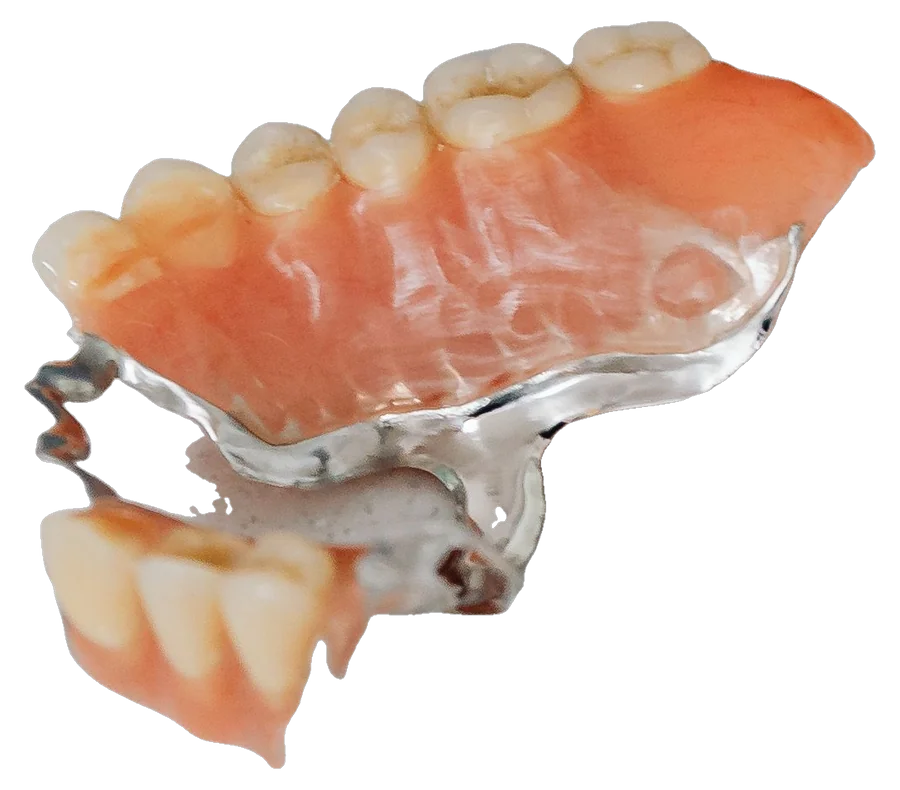
A removable denture is a prosthesis that you take out and put in yourself. It restores chewing, speech and the look of your smile when several or all teeth are missing in one or both jaws. The artificial teeth are matched in shape and colour, and the base of the denture is tinted to match the gums.
A partial removable denture is used when some strong teeth remain: they act as anchors and take most of the chewing load. The denture is held by clasps — small hooks that wrap around the anchor teeth — or by attachments: miniature locks built into crowns on your own teeth that cannot be seen when you smile. A cast partial denture with a metal framework is more compact than an all-acrylic one and spreads the load on the anchor teeth better.
A complete removable denture is needed when no teeth remain in the jaw. Its base, made of acrylic or of more flexible nylon, stays in place by fitting closely against the tissues: in the upper jaw it covers the palate and works like a suction cup, while in the lower jaw it rests on the gum and therefore usually holds less firmly.
Worth knowing: a removable denture does not stop bone loss where teeth are missing, so over time it fits less snugly and needs adjusting — relining — or replacing. If implants are an option for you, the doctor will also explain the fixed alternatives. The prosthodontist at iOrtho in Yerevan will examine your mouth and choose the right design — book a consultation.
Benefits
Affordable
Removable dentures usually cost less than implants, crowns or bridges.
Made quickly
Usually one to three weeks depending on complexity, whereas treatment with implants takes several months.
Chewing and speech
A denture improves chewing and speech compared with having no teeth.
When implants are not possible
With too little bone or contraindications to implants, a removable denture remains an accessible way to restore your teeth.
A natural look
The artificial teeth are matched in shape and colour, the base matches the gums, and attachments cannot be seen when you smile.
Indications
- Several missing teeth, with remaining teeth that can anchor a denture
- Loss of all teeth in one or both jaws
- Bone loss when bone grafting is not possible
- General conditions — such as osteoporosis or uncontrolled diabetes — if the doctor advises against implants because of them
- Not wanting extensive surgery
- A temporary solution after an extraction, before restoration on implants
- Splinting loose teeth with a cast partial denture
Treatment stages
- 1.
Consultation and examination
The prosthodontist examines your mouth, assesses the remaining teeth, gums and bone, and suggests a suitable design.
- 2.
Preparation
Caries and gum problems are treated if needed, and teeth that cannot be saved are removed. The anchor teeth for a partial denture must be strong.
- 3.
Impressions and choosing the teeth
Impressions of the jaws are taken, the jaw relationship is recorded, and the shape and shade of the artificial teeth and the colour of the base are chosen.
- 4.
Try-in
Before final fabrication the denture is tried in: the doctor checks the fit, how the teeth meet and how it looks.
- 5.
Fitting and adjustments
The doctor fits the denture and shows you how to put it in, take it out and clean it. Adjustments may be needed while you get used to it if it rubs.
What's included
- Examination and choosing the denture design
- Impressions and recording the jaw relationship
- Choosing the shape and colour of the teeth and base
- Try-in and making the denture
- Fitting the denture and learning how to care for it
Care rules
After meals
Take the denture out and rinse it after every meal: the base material can absorb odours and pigments.
Cleaning
If your doctor recommends it, take the denture out at night and clean it with special antiseptic products.
Getting used to it
At first you may notice sore spots, extra saliva or changes in your speech. Do not adjust the denture yourself — the doctor will do it.
Fixative
If needed, use a special denture fixative — your doctor will advise which one.
Regular check-ups
Over time the bone under the denture shrinks and the fit loosens — see your prosthodontist so it can be relined or replaced in good time.
Questions and answers
How long does it take to get used to a removable denture?
It varies from person to person. At first the denture may feel strange: there may be sore spots, extra saliva or changes in speech. As a rule, the discomfort fades as you get used to it, and if the denture rubs, the doctor will adjust it.
Should the denture be taken out at night?
You take a removable denture out yourself — to clean it after meals and, if your doctor recommends it, at night. The doctor explains in detail how to wear and care for it when fitting the denture.
Why does a denture fit less well over time?
Under a removable denture the bone where teeth are missing keeps gradually shrinking, so over time the denture fits less snugly and may move when you eat or talk. It is then relined or a new one is made — which is why regular check-ups matter.
What are removable dentures made of?
The base is usually acrylic, which is strong and rigid, or more flexible nylon, which is lighter and looks more natural but can flex when you chew hard food. Cast partial dentures have a metal framework. The material is chosen to suit the clinical situation.
Is there an alternative to a removable denture?
Yes — fixed restorations: bridges, implant crowns and, when no teeth remain, fixed implant-supported dentures. They do not need to be taken out, and implants help preserve bone, but these options are not suitable for everyone — for example, with severe bone loss. The doctor will suggest the right option after an examination.
Book a consultation
Related services
Veneers in Yerevan
Thin ceramic shells for a beautiful, natural-looking smile
Veneers in YerevanZirconia crowns in Yerevan
A strong, natural-looking restoration for a damaged tooth
Zirconia crowns in YerevanImplant crowns in Yerevan
A new tooth in place of a lost one, without reducing its neighbours
Implant crowns in Yerevan