Caries treatment in Yerevan
We treat caries at any stage and preserve as much healthy tissue as possible: without drilling at the earliest stage, and with a tooth-coloured composite filling later on.
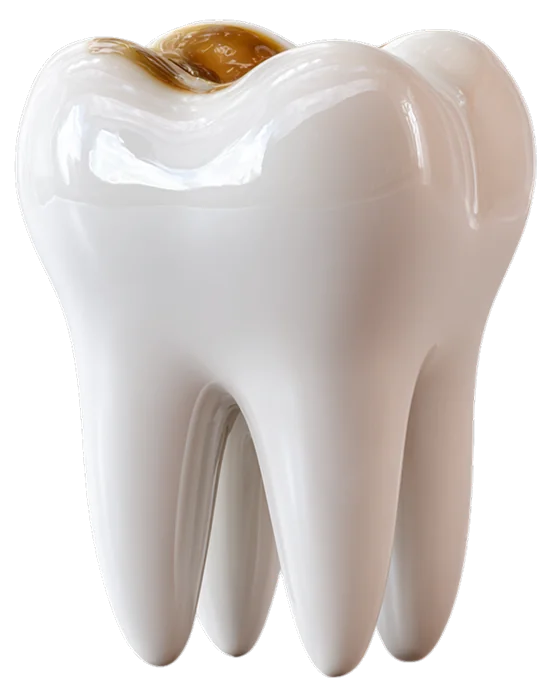
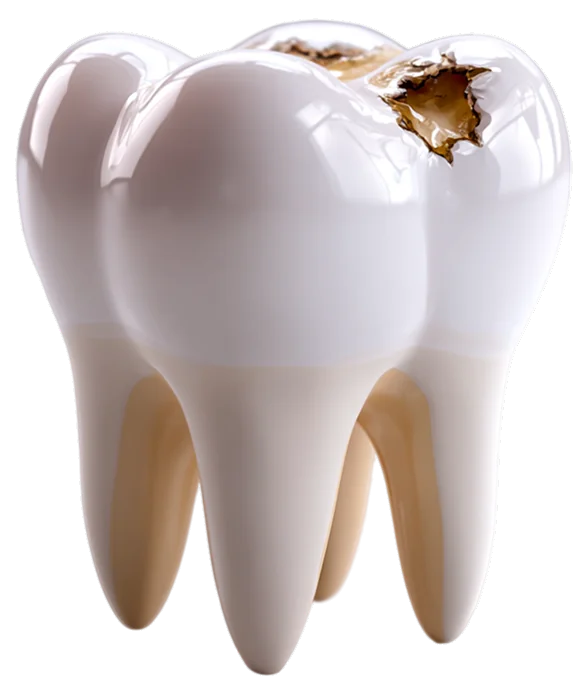
Caries is the gradual destruction of the hard tissues of a tooth — enamel and dentin — by acids produced by bacteria in the mouth. It starts as a chalky white spot on the enamel, an area of demineralisation. If the process is not stopped, a cavity forms, and the infection reaches the deeper, sensitive layers and may inflame the nerve, causing pulpitis. Treatment then becomes more complex and takes longer.
How caries is treated at each stage
- White-spot stage. There is no cavity yet, so no drilling or filling is needed: professional hygiene and a course of remineralisation strengthen the enamel with gels and varnishes containing calcium, phosphorus and fluoride, and the spot is monitored.
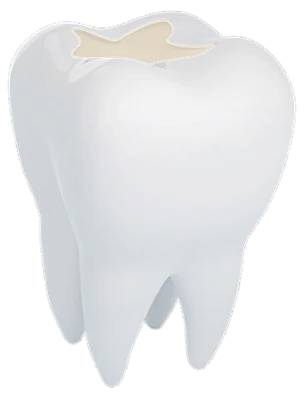
- Superficial caries. A lesion limited to the enamel is removed with minimal intervention, and the tooth is restored with a light-cured filling that matches the colour and translucency of enamel.
- Moderate caries. The decay has reached the dentin and the cavity grows fairly quickly, so treatment should not be put off. The dentist removes all infected tissue and places a permanent composite filling.
- Deep caries. Only a thin layer of healthy tissue is left above the pulp. After cleaning the cavity the dentist places a medicated liner and a temporary filling and watches the tooth for a few days; if it causes no trouble, a permanent filling is placed at the next visit.
Secondary caries is a separate case: decay under an existing filling, inlay, veneer or crown. It develops when a restoration does not fit tightly or plaque builds up at its margin, and it can go unnoticed for a long time, so its depth is checked on X-rays.
At iOrtho in Yerevan caries is treated under local anaesthesia, with the tooth isolated by a rubber dam during the work. The composite filling is built up in layers to restore the shape and shade of the tooth. Book a consultation: a general dentist will examine your teeth, order an X-ray if needed and propose a treatment plan.
Benefits
Treatment from the white-spot stage
At the very earliest stage caries can be stopped without drilling or a filling — by remineralising the enamel.
Gentle on healthy tissue
The dentist removes only the affected enamel and dentin and preserves healthy tissue, so the tooth stays strong.
Accurate diagnostics
When indicated, a periapical X-ray or CT shows caries on contact surfaces and under old fillings.
Under local anaesthesia
The treatment area is numbed; as a rule, the injection site is first treated with an anaesthetic gel.
A tooth-coloured filling
Composite is applied in layers and matches the colour and translucency of enamel, so the filling looks almost like your own tooth.
Often in a single visit
Superficial and moderate caries are usually treated in one visit; deep caries needs at least two.
Indications
- Chalky white or dark brown spots on the enamel
- A rough patch on a tooth that you can feel with your tongue
- Sensitivity to sweet, sour or cold food that passes quickly
- Food getting stuck in the pits of a tooth or between teeth
- A cavity that you can see in a mirror or feel with your tongue
- An unpleasant smell from food debris trapped in the cavity
- Suspected decay under an old filling, inlay or crown
Treatment stages
- 1.
Examination and consultation
The general dentist examines every tooth surface, including hard-to-reach ones, checks the fissures with a probe and tests the sensitivity of the tooth. You learn the treatment plan and its cost.
- 2.
X-ray
To assess how deep the decay goes, especially on contact surfaces and under fillings, a periapical X-ray or CT is taken when indicated.
- 3.
Anaesthesia and isolation
Local anaesthesia, then a rubber dam — a latex sheet that keeps saliva away from the tooth. A dry working field is needed for the filling to bond reliably.
- 4.
Removing the decay
The dentist carefully removes the affected tissue, disinfects the cavity with an antiseptic and, if needed, places an insulating or medicated liner.
- 5.
Filling
Composite is applied in layers, each one cured with a lamp. The dentist recreates the cusps and fissures of back teeth or the translucent edge of front teeth.
- 6.
Shaping and polishing
The dentist checks the bite, adjusts the filling and polishes it to a shine: a smooth surface collects less plaque.
What's included
- Examination of the tooth and assessment of how deep the decay goes
- Local anaesthesia and isolation of the tooth with a rubber dam
- Removal of the affected tissue and antiseptic cleaning of the cavity
- A tooth-coloured filling made of light-cured composite
- Shaping, polishing and a bite check
Care rules
While the anaesthetic lasts
A composite filling hardens straight away, but wait until the numbness wears off before eating or having hot drinks, so you do not bite your cheek or lip.
If the tooth reacts
Slight sensitivity in the first few days is possible. If the pain gets worse, does not go away or appears when you bite, book a check-up.
Home hygiene
Brush morning and evening and clean between your teeth with floss, interdental brushes or a water flosser: decay most often starts where plaque is left behind.
Professional hygiene
Every 3–6 months, as your dentist advises: cleaning removes plaque and tartar that cannot be fully removed at home.
Check-ups
See a general dentist at least once a year: decay under a filling can go unnoticed for a long time.
Questions and answers
Does caries treatment hurt?
Treatment is done under local anaesthesia: usually the injection site is first numbed with a gel, then the anaesthetic is given. During the work you normally feel only pressure and vibration.
How many visits does caries treatment take?
Superficial and moderate caries are usually treated in one visit. Deep caries needs at least two: first a medicated liner and a temporary filling while the tooth is monitored, then a permanent filling.
Can caries be treated without drilling?
Yes, at the white-spot stage, before a cavity forms: professional hygiene and a course of remineralisation with calcium, phosphorus and fluoride gels and varnishes, with the spot monitored over time. Once a cavity has formed, a filling is needed.
What is secondary caries?
It is decay under an existing filling, inlay, veneer or crown. It develops when the restoration does not fit tightly or plaque builds up at its margin. It stays hidden for a long time and is often already moderate or deep when found, so its depth is checked on X-rays.
What happens if caries is left untreated?
The cavity grows and sensitivity turns into a nagging ache. Once the decay reaches the pulp, pulpitis develops and a filling alone is no longer enough — root canal treatment is needed. Left untreated, the infection can spread beyond the root and the tooth may be lost.
Book a consultation
Related services
Pulpitis treatment in Yerevan
Root canal treatment to save your own tooth
Pulpitis treatment in YerevanAesthetic tooth restoration in Yerevan
The natural shape and colour of your teeth, restored with composite
Aesthetic tooth restoration in YerevanProfessional teeth whitening in Yerevan
Several shades lighter, under a dentist’s supervision
Professional teeth whitening in Yerevan