Pulpitis treatment in Yerevan
When decay reaches the nerve, a filling alone is no longer enough. The dentist cleans and seals the root canals to stop the inflammation and save the tooth.
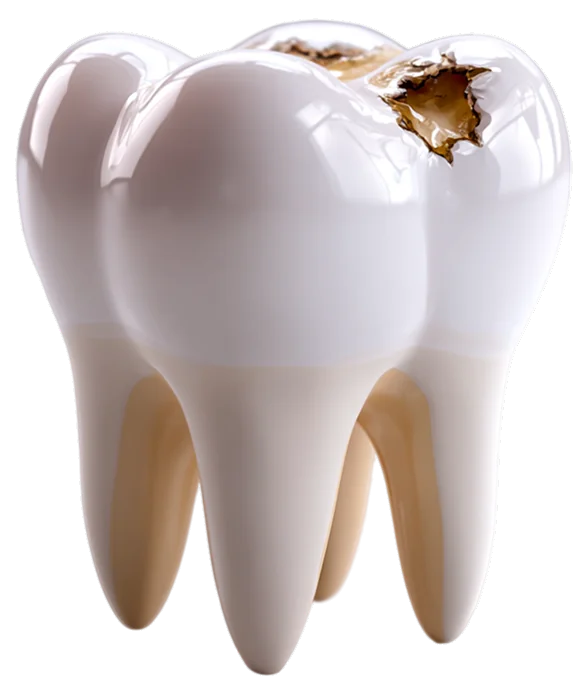
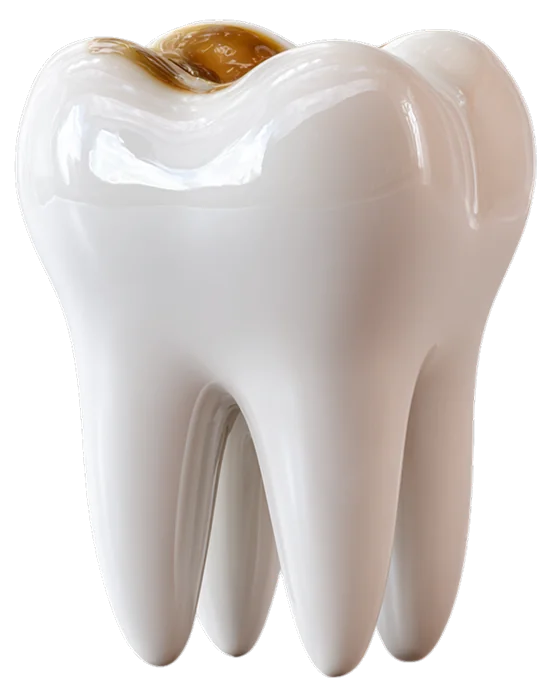
Pulpitis is inflammation of the pulp, the soft tissue inside a tooth that contains the nerve and blood vessels. It most often develops when caries is not treated in time and the infection reaches the nerve; a chipped or cracked tooth can also let bacteria in. Pulpitis usually shows itself as sharp, throbbing pain that starts on its own, gets worse at night and may spread to the temple or ear.
At this stage a filling is no longer enough: endodontic, or root canal, treatment is needed. The dentist removes the inflamed pulp, shapes and disinfects the canals and seals them with gutta-percha, a biocompatible material. The quality of the filling is checked on a control X-ray, and the tooth is closed with a temporary filling until the next visit.
If pulpitis is not treated, the pain may ease, but the inflammation becomes chronic and the infection then spreads beyond the root: periodontitis develops, and a granuloma or cyst may form at the root tip. That treatment takes longer — the canals are filled with a medicated paste for a time and the result is followed on X-rays. Without treatment the tooth may be lost.
At iOrtho in Yerevan root canals are treated under local anaesthesia, with the tooth isolated by a rubber dam. Afterwards the tooth is restored with a filling or, if it is badly broken down, the dentist may suggest an inlay or a crown. Book a consultation: a general dentist will examine the tooth, assess the canals on an X-ray and explain the treatment plan.
Benefits
Keeping your own tooth
Root canal treatment usually makes it possible to keep the tooth even when the inflammation has reached the nerve.
Under local anaesthesia
The area is numbed, so during the procedure you usually feel only pressure.
Rubber dam isolation
A latex sheet keeps saliva away from the tooth, so the canals are treated in clean, dry conditions.
A control X-ray
After the canals are filled, an X-ray is taken to confirm the quality of the filling.
If a crown is needed
When a filling is not enough to protect the tooth, the dentist will refer you to the clinic’s prosthodontist.
Indications
- Sharp, throbbing pain that starts on its own, often at night
- Pain from hot or cold that lingers after the trigger is gone
- Pain spreading to the temple, ear or neck, so it is hard to tell which tooth hurts
- Pain when biting or tapping on the tooth
- A feeling that the tooth has “grown” and gets in the way when you close your jaws
- Swelling, throbbing or a fistula on the gum near the tooth
- Deep decay, a chip or a crack through which infection can reach the pulp
Treatment stages
- 1.
Examination and X-ray
The dentist asks about your symptoms, examines the tooth and assesses the canals and the tissue at the root tip on a periapical X-ray or CT.
- 2.
Anaesthesia and isolation
Local anaesthesia, then a rubber dam keeps saliva away so the canals stay clean and dry.
- 3.
Removing the pulp
Through an opening in the crown of the tooth, the dentist removes the inflamed pulp from the pulp chamber and the root canals.
- 4.
Cleaning the canals
The canals are mechanically widened and smoothed, then rinsed with antiseptic solutions.
- 5.
Filling and checking
The canals are sealed with gutta-percha and a control X-ray is taken. The tooth is closed with a temporary filling.
- 6.
Restoring the tooth
At the next visit the temporary filling is replaced with a permanent one; if the tooth is badly broken down, the dentist may suggest an inlay or a crown.
What's included
- Examination of the tooth and a diagnostic X-ray
- Local anaesthesia and rubber dam isolation
- Removal of the pulp, mechanical and antiseptic cleaning of the canals
- Sealing the canals with gutta-percha and a control X-ray
- A temporary filling until the next visit
Care rules
While the anaesthetic lasts
Do not eat or have hot drinks until the numbness wears off, so you do not bite your cheek or lip.
Protect the temporary filling
Until the permanent filling is placed, avoid chewing hard food on the treated side: a temporary filling is less durable.
If it hurts
In the first few days the tooth may be slightly tender when you bite. If the pain gets worse, swelling appears or the temporary filling falls out, contact your dentist straight away.
Do not put off the restoration
Come for the permanent filling on the agreed date: after root canal treatment the tooth needs reliable protection against breaking.
Questions and answers
Is root canal treatment painful?
It is done under local anaesthesia, so during the procedure you usually feel only pressure. In the first days after the visit the tooth may be tender when you bite; if the pain gets worse, let your dentist know.
How many visits are needed?
Usually at least two: at the first visit the canals are cleaned and sealed and the tooth gets a temporary filling; at the second a permanent filling is placed. If the inflammation has spread beyond the root, treatment takes longer. The dentist gives the exact plan after the X-ray.
How can I tell pulpitis from deep caries?
With deep caries, pain from cold or sweet things passes quickly once the trigger is gone. With pulpitis it lingers, can start on its own, gets worse at night and may spread to the ear or temple. Only a dentist can make the diagnosis, after an examination and an X-ray.
The pain has gone — can I skip treatment?
No. If the pain has eased and comes back from time to time, the inflammation may have become chronic. Without root canal treatment the infection spreads beyond the root: periodontitis develops, a granuloma or cyst may form and the tooth may be lost.
Do I need a crown after root canal treatment?
Not always. If the tooth is only slightly damaged, it is restored with a filling. If a filling is not enough to protect the tooth from breaking, the dentist may suggest an inlay or a crown, made by a prosthodontist.
Book a consultation
Related services
Caries treatment in Yerevan
From the white-spot stage to a tooth-coloured filling
Caries treatment in YerevanAesthetic tooth restoration in Yerevan
The natural shape and colour of your teeth, restored with composite
Aesthetic tooth restoration in YerevanProfessional teeth whitening in Yerevan
Several shades lighter, under a dentist’s supervision
Professional teeth whitening in Yerevan